Protecting Students,
Enforcing Accountability.
Our Vision & Mission
Clarity, Courage, and Accountability.
Vision
A Nigeria where every student learns in safety, dignity, and fairness — free from harassment, extortion, cultism, and corruption.
Mission
To protect students by exposing abuse and enforcing accountability — through SHIELD Committees, the ALL-4-ONE Fund, PG Resolution Desks, and a Transparency Hub that publishes the truth.
What We Fight
Every Nigerian student deserves a safe, fair campus. These are the barriers we confront together.
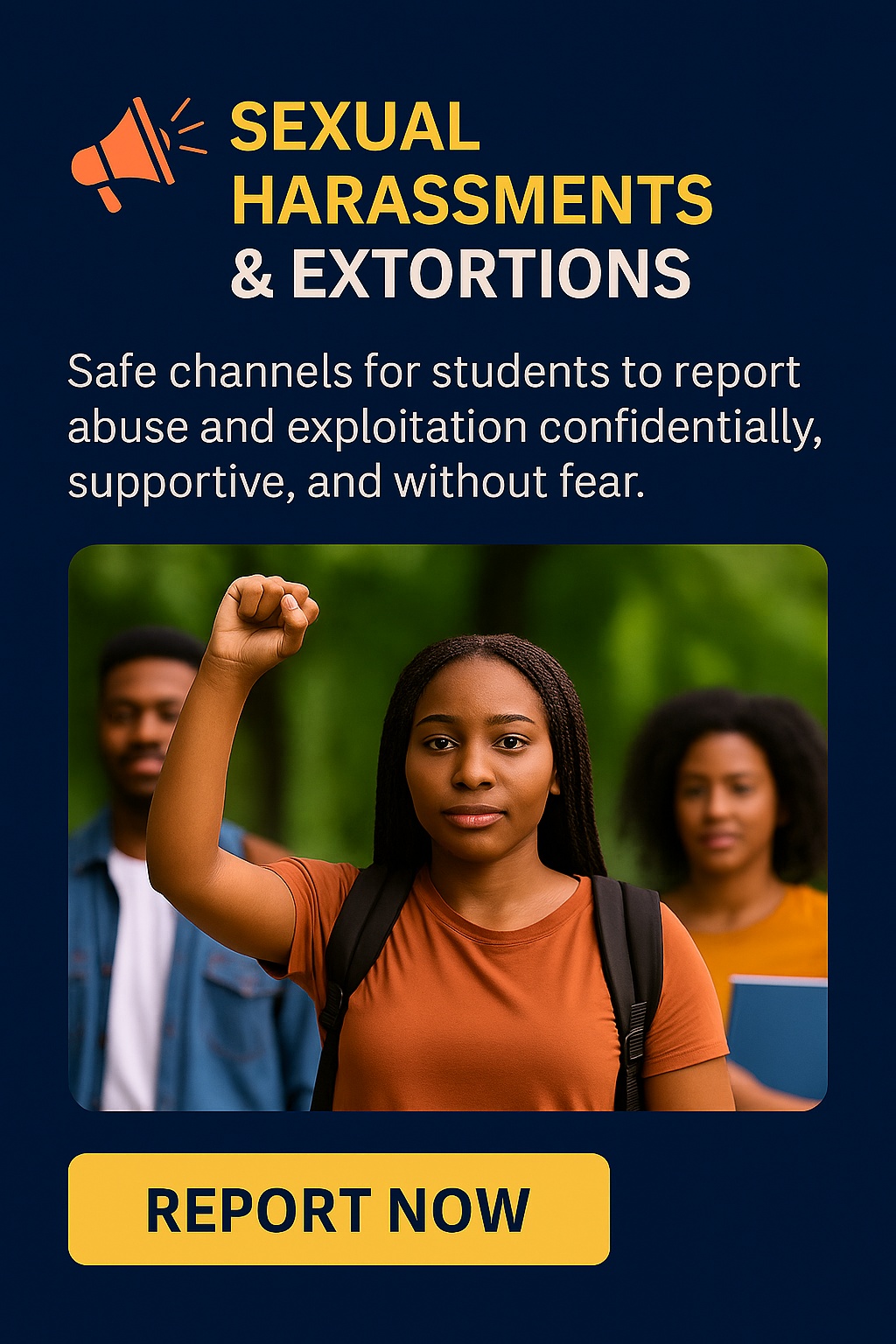
Sexual Harassments & Extortions
Safe channels to report unwanted advances, sex-for-grades, and financial exploitation — without fear of intimidation or retaliation.
Report Now
Financial & Cyber Crimes
Illegal fees, campus fraud, or online scams — we protect students against exploitation on and off campus.
Report Case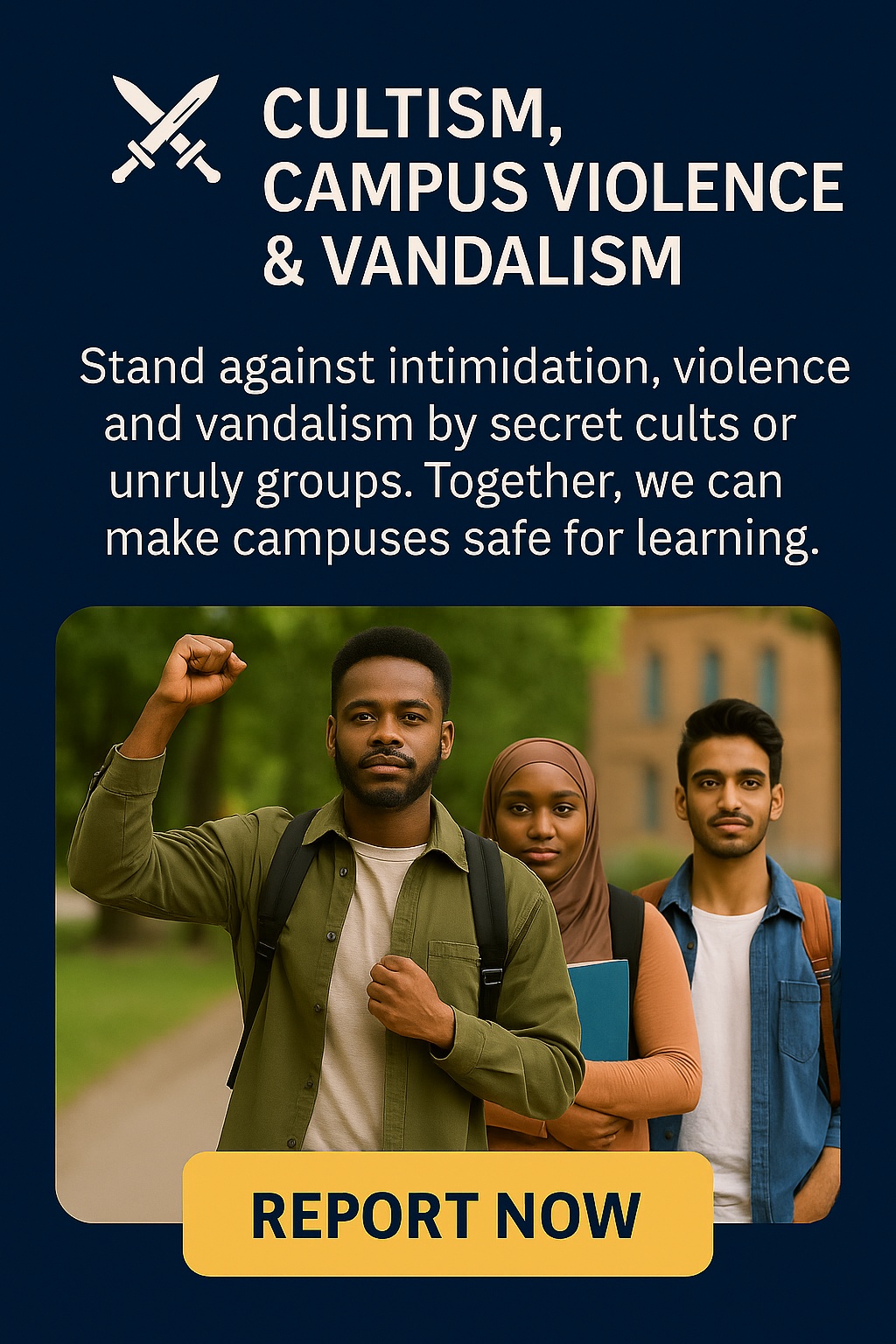
Cultism, Violence & Vandalism
Fighting cult intimidation, violent clashes, and vandalism that put students’ safety and education at risk.
Report Incident
Leadership Support
Expose diversions of hostel/classroom repair funds — from broken chairs to leaking roofs, students deserve accountability.
Report issue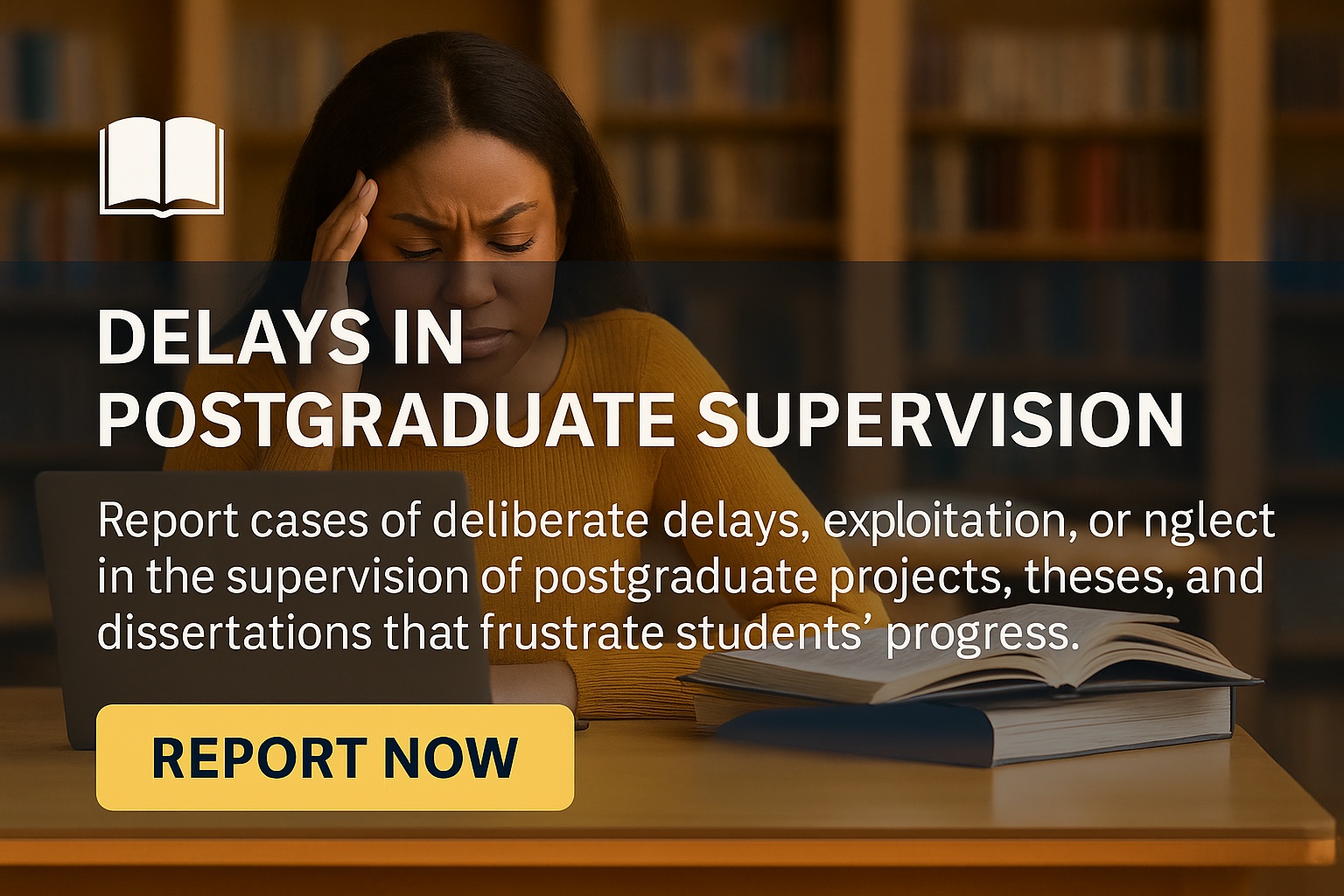
PG Supervision Delays
We intervene when postgraduate students face deliberate delays in project or thesis supervision that stall their progress.
Report DelayAll reports are received confidentially. Students are never left alone.
How We Solve It

SHIELD Committees
Independent watchdogs in each State working with stakeholders — Staff and Student leaders, security agencies, journalists, and civil society — to review reports, escalate cases, and publish monthly statistics for each Tertiary Institutions in the State.
The SHIELD Committee
PG Resolution Desk
Dedicated desk to intervene when postgraduate students face undue supervision delays — especially where exploitation is suspected. We escalate formally and track timelines until action is taken.
Request intervention
Leadership Support
Partnering with institution management to promote efficient use of maintenance and safety resources. Early reporting, quick response, and visible results — for a better, safer campus.
Report issue
ALL-4-ONE Desk
Rapid response unit in each institution providing counselling, emergency mobility & support, and urgent medical help.
Get supportOUR PARTNERS
We collaborate with law-enforcement, anti-corruption agencies, campus unions, and the press to keep students safe — with accountability at the center.





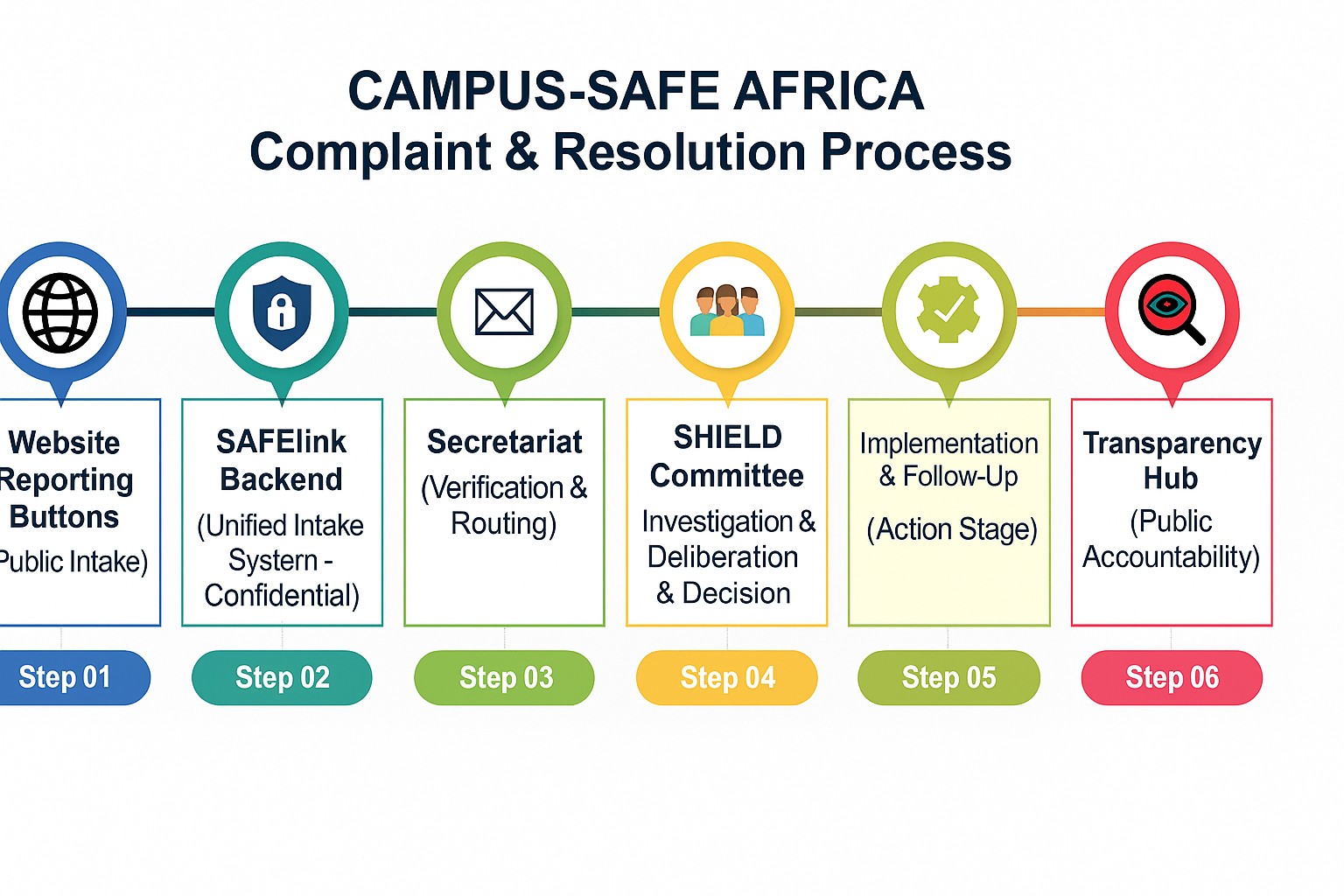
During the Investigation Phase, evidence is reviewed, witnesses or supporting parties may be contacted, and related departments or authorities (such as ICPC, EFCC, Police, or NSCDC) collaborate to establish facts. Once findings are compiled, the Deliberation & Decision Phase begins — where SHIELD members jointly evaluate the investigation report, deliberate virtually, and reach a fair, consensus-driven resolution.
After a decision is reached, the Secretariat ensures proper follow-up — either by implementing internal recommendations, referring the case to the appropriate university or law-enforcement channel, or providing advisory feedback to the complainant. Only verified, sanitized summaries of resolved cases — stripped of personal identifiers — are then published on the Transparency Hub to promote accountability, institutional learning, and public confidence without compromising confidentiality.